Julie's story
Living with primary lymphoedema and deep vein thrombosis (DVT)
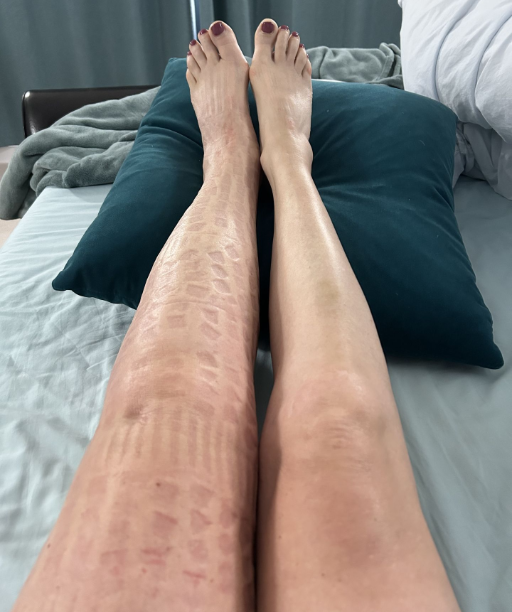
Lymphoedema has been life-changing for me, both physically and mentally. I experience frequent discomfort, sometimes pain, and generally feel more tired than I used to. My leg feels different daily and can change throughout the day depending on what I’m doing. Being static is the worst thing for it, so often things like travelling or social events can be hard for me.
The most challenging aspect has been getting the right compression. What has helped me most physically is finding the right compression, especially wraps, which I really rely on to keep my leg under control. My leg fluctuates in size, so finding compression that fits well and works effectively is an ongoing struggle. In fact, the whole process of managing my leg is constant, and coming to terms with the fact that lymphoedema is a chronic, progressive condition with no cure has been difficult to accept.
In terms of support and information, I’ve found social media and the advice from my private therapist to be invaluable. Early on, I felt very alone in managing the condition. I hadn’t met anyone else with lymphoedema. But after a few months, I began connecting with others on Instagram and eventually became part of a small but incredibly supportive social group of "lymphies." We check in with each other online, offer advice, vent when needed and even meet up in-person occasionally. That sense of connection and understanding has been invaluable to me.

I have primary lymphoedema, and it took around two years from the onset of symptoms (sudden swelling in the whole of my left leg) to finally receive a diagnosis.
I visited my GP several times, who did not think these early signs were lymphoedema. About six months in, my leg became very painful and red, and a deep vein thrombosis (DVT) was found in the lower leg. Treatment was then focused on the DVT, but even after that was resolved, the swelling persisted.
Eventually, I was referred to a vascular consultant, but the waiting time was long, so I decided to seek a private consultation with Professor Mortimer, who was finally able to diagnose me with primary lymphoedema.
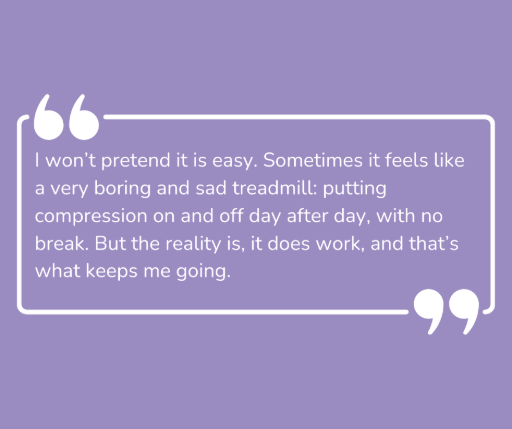
My treatment plan is a combination of NHS and private care. The main focus of my lymphoedema management is compression. I wear compression just about 24 hours a day - the only time I don’t is when I’m in the shower! It’s something I’ve learned I need to be really consistent with, because compression is absolutely key to managing my lymphoedema. The routine might be relentless at times, but it’s what helps keep my leg under control and allows me to stay active and healthy.
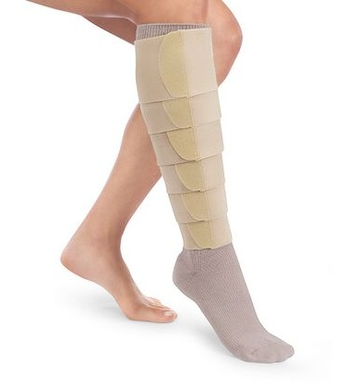
I use full-length made-to-measure compression stockings [Jobst Elvarex class 3], which I receive through both the NHS lymphoedema service and my private therapist- so it’s a mix of NHS-funded and privately purchased compression garments. I also use wraps [Jobst FarrowWraps] and a night-time garment [Haddenham Comfiwave], which helps maintain progress overnight.
I underwent DLT (Decongestive Lymphatic Therapy), including bandaging, with a private therapist, which significantly reduced the size of my leg. I’ve continued this at home with my own bandaging and wrapping routine, and I’m pleased with the results. I’ve also tried MLD (Manual Lymphatic Drainage), and while it makes my leg feel good immediately after, the effects don’t seem to last for me.



To me, real patient representation means giving a voice to people who live with a condition every day, not just as case studies or statistics, but as active participants in shaping the care, research, and conversations that affect us. It means being seen and heard for our lived experiences: all the realities of managing a chronic condition like lymphoedema. Patients should be part of the process, not just at the end. Whether it's helping design more effective services or simply ensuring the language used around our condition is respectful and accurate, we should be involved.
I’ve found Patient Choice to be a much more efficient way of getting my compression garments. It saves me from having to go to the GP or nurse every time I need a compression garment, which can be time-consuming and frustrating.
When I’m measured for new garments, Patient Choice liaises directly with the lymphoedema nurse and the manufacturers, which makes the whole process quicker, and smoother compared to going through a GP and pharmacist. I also really appreciate the home delivery. It's convenient and means I can get what I need without unnecessary delays or appointments.